

TikTok ads that bring customers, not just views.
Nobody on TikTok is looking for a supplier. People watch video after video, and skip anything that looks like an ad. A video that speaks TikTok's language, about what is really on their mind, stops them. We build and run the campaigns, and report every closed deal back to TikTok, so it brings you more paying customers, not just views.
3 costly mistakes in a new kitchen
Custom kitchensWhat to check before you hire a carpenterSponsored
On this page
What are TikTok ads
TikTok ads are paid ads you run through TikTok Ads Manager. They appear mainly in the For You feed, between the videos people scroll through, and they look almost like any other video: full screen, vertical, with sound, and with a button that leads to a form, a website or a message. TikTok also has a keyword search campaign, like Google, but it isn't available to advertisers in Israel yet.
How TikTok decides who sees your ad
TikTok has an auction too. When an ad's turn comes up in the feed, TikTok chooses between the advertisers targeting that person, based on how much they are willing to pay and how relevant the ad is to that person. The difference is in what the system knows: TikTok knows each user by what they watch to the end, what they skip and what they react to. That is why a good video finds its audience almost on its own.
What makes TikTok different
On TikTok, the feed isn't built from the people you follow, but from what interests you. Most videos come from people the viewer doesn't know, so a business nobody has heard of yet gets an equal chance, if its video is interesting. On the other hand, anything that looks like an ad gets a quick swipe up. A good ad on TikTok looks like a good TikTok video.
In one line: on TikTok, your ad isn't only competing with your competitors' ads. It is competing with the next video in the feed.
Campaign objectives, and where the lead is created
Every TikTok campaign starts with choosing an objective. The objectives fall into three groups: Awareness, Consideration and Conversion, and within them are reach, website traffic, video views, lead generation and sales. The objective tells TikTok who to show the ad to: people likely to watch, click, leave their details or buy. For businesses that sell a service, the objective is Lead generation in most cases. Then you choose where the lead is created, and which type of ad brings it in:
A form inside the app Instant Form
The form opens inside TikTok, without leaving the app, and some of the details fill in automatically. It is the fastest way to get a lead, so qualifying questions are what separate a real lead from someone who is just curious.
A landing page on your site Website + Pixel + Events API
The click leads to your page, inside TikTok's browser. You need the pixel and the Events API, so TikTok knows who left their details, and a page that loads fast on mobile.
A direct message Messaging
The ad opens a chat with the business in TikTok's messages, and a phone number or email the person types in the chat is saved automatically as a lead. A good fit for people who want to ask before they leave their details, as long as someone answers fast.
Promoting an existing video Spark Ads
You promote a video already posted on the business's account, or on a creator's account with their permission. The ad stays a real post: likes and comments are kept, and anyone who visits the profile sees more of your content.
Retargeting Custom Audiences
Ads for people who already watched your videos, visited your profile, opened the form or visited the site. A small audience but a warm one, and usually where a lead costs the least.
An automated campaign Smart+
TikTok chooses the audience, the combinations of videos and text, and how the budget is split between the ads. Since the 2026 update, you can decide what is automated and what stays manual. It saves work, but it needs enough videos and enough data to work.
How much do TikTok ads cost
The cost has two separate parts: the ad budget, paid directly to TikTok, and the management fee, paid to whoever runs the campaigns.
The ad budget
You set a daily budget, or a budget for the whole campaign. There is a minimum: a campaign's daily budget has to be more than $50, and an ad group's more than $20. Beyond that, the budget has to let the system collect enough results to learn. An account opened in Israel can pay in shekels. In most campaigns the price is set by impressions, and it changes with the audience, the season and the competition.
The management fee
There are three common models: a fixed monthly fee, a percentage of the ad budget, or a mix of the two. With us, the price depends on the scope of work and the ad budget, and you know it before we start. On TikTok, the scope of work depends mainly on four things:
- How many new videos you need each month, and who shoots them: you, content creators, or a mix.
- How many services or audiences you advertise, and how many campaigns they need.
- Whether you need a landing page built.
- How many channels we run at the same time: TikTok only, or Meta and Google too.
The number that really matters: what a customer costs
On TikTok it is easy to get a lot of views, and sometimes a lot of cheap leads too. The question is how many of them become customers. A cheap lead who never picks up the phone costs more than an expensive lead who closes a deal, so we measure cost per deal, not just cost per lead. You can only do that when ad data and sales data sit in the same place, and that is the job of the CRM.
How we run TikTok campaigns
Seven steps, from the first audit to growing the budget. If you want to see how a campaign is actually set up, you will find it in the setup guide further down this page.
What already works for you
We go through your current advertising and your CRM: who the customers who close are, what they ask on calls, and what convinced them. On TikTok, that is the raw material for the videos.
Angles and openings
We write openings and short scripts: the problem, a common mistake, before and after, a question every customer asks. Every angle is a separate video, and every opening is a test.
Shooting in TikTok's language
On a phone, not a polished production: someone from the business talking to camera, the team at work, a customer telling their story. On TikTok the creative is most of the work, so we agree up front how many videos go live each month, and who shoots them.
Form, landing page and tracking
A form with questions that filter out people who aren't a fit, or a fast landing page. We connect the pixel and the Events API, and every lead enters the CRM with the campaign and the video that brought it.
Launch and the learning phase
In the first days the system learns who to show the ads to. We watch lead quality closely, and we don't change everything every day, so the campaign doesn't go back to learning from scratch.
Improving by deals
This is where the CRM comes in. Every closed deal is reported back to TikTok, and the system learns to look for more people like the customers who paid, not like the people who only fill in forms. At the same time we see which videos and openings brought deals: we shoot new versions of those, and stop what doesn't bring deals.
Scaling
When a video brings deals at a price that pays off, we raise the budget gradually, and post new videos before the audience tires of the old ones.
What you get when you work with us
- The ad account and pixel in your nameEverything sits inside the business's own Business Center. The account, the data and the history stay yours, even if you decide to stop.
- A CRM included in the priceEvery lead comes in with the campaign and the video that brought it, and you see what happened with it all the way to the close.
- A status call every week, and a report every two weeksBy campaign and video: what worked, what didn't, and what we shoot next.
- Month to monthNo contract and no commitment period.
- Ongoing availabilityUpdates, questions and video ideas on WhatsApp, by phone and in meetings.
How to choose a TikTok ads agency
Six questions worth asking any TikTok ads agency or freelancer before you sign. Us included.
- Whose name is the account in?The ad account and the pixel should sit in your own Business Center. If they sit with the agency, the day you leave you start from zero.
- How do they measure success?Views and cost per lead are only the start. Ask how they know which leads became deals, which video they came from, and whether that information goes back to TikTok.
- Who shoots the videos, and how many?On TikTok, videos wear out fast. Ask how many new videos go live each month, and who writes and shoots them.
- Do they understand TikTok?An agency that puts your Facebook ads on TikTok as they are pays for views that don't last a second.
- Is there a commitment?When you work month to month, whoever runs your campaigns has to prove themselves again every month.
- Did they ask about your business?If they didn't ask about your margins, what a customer is worth to you and how your sales process works, they can't know how much a lead is worth paying for.
Who it's for, and who it isn't
TikTok ads are a good fit if
- Your service can be shown on video: before and after, the work in progress, the result.
- Your service or product costs at least ₪3,000, so one deal covers a lot of leads.
- You already advertise, or have in the past, and there is data and messaging to learn from.
- Someone on your side is willing to stand in front of the camera, or there is a budget for content creators.
- Someone on your side calls leads back fast. A person who left their details between two videos won't remember it a few hours later.
Less of a fit if
- Customers only look for you when something is urgent, like a locksmith or a tow truck. Google suits that better.
- You sell to people in a specific job role at companies. On TikTok it is hard to reach an audience that precise.
- There is nobody to shoot new videos every month.
- You have never advertised before, or your service costs less than ₪3,000.
Setting up a TikTok lead campaign, step by step
A TikTok lead campaign is set up in ten steps: business account, tracking, objective, bid strategy, budget, audience, placements, videos, form, and a check before launch. This is the order we work in, and what to watch for at each step.
Open a Business Center in the business's name
The ad account, the business's TikTok account and the pixel, all inside a Business Center in the business's name. That way the assets are yours, and whoever works on them gets access, not ownership.
Connect the pixel and the Events API
The pixel reports from the browser, and the Events API reports straight from the server or the CRM. TikTok recommends using both together, with deduplication, because some events never pass through the browser. Without reliable tracking the system doesn't know who left their details, and it can't learn.
Choose the objective: Lead generation
Then choose where the lead is created: instant form, website or message. The section on instant forms and landing pages helps you decide.
Choose a bid strategy
There are two: as many results as possible for the budget (Maximum Results), and a target cost per result (Target Cost per Result). At the start, usually the first one. Once there is enough data, and a clear price you are willing to pay for a lead, you move to the second. Since 2026 you can switch between them in a running ad group, without starting over.
Set the budget
A budget that lets the system collect enough results to learn. According to TikTok, performance starts to stabilize after about 25 results or 7 days, and it recommends a daily budget of about 10 times the average cost per result. On a small budget, one strong ad group is better than several weak ones.
Define the audience
Location, age and language, and then let the system search. On TikTok the video does most of the filtering: people interested in the topic watch to the end, and the system learns from them. Custom audiences, like people who watched a video or visited the site, are for retargeting.
Choose placements
For a lead campaign, the TikTok feed is the main placement. If the system adds other placements, check in the reports whether the leads from there become customers, not just what they cost.
Upload several different videos
TikTok recommends 3 to 5 different videos in each ad group: different angles and openings, not the same video in other colors. Videos that already worked organically can be promoted with Spark Ads. More on this in the section on videos that work.
Build the form
Qualifying questions: budget, area, and when they need the service. An intro screen that explains what they get, and a completion screen that says what happens next. There are two form types. More Volume is the default. In a Higher Intent form, people review and confirm their details before they send, which cuts leads sent by mistake. And connect the form to the CRM: Ads Manager only keeps leads for 90 days.
Check before you launch
Send a test lead, and check that it reached the CRM with all the details. Make sure the videos were approved, the links work and the budget is right.
Instant form, landing page or message
There are three ways to get a lead from TikTok, and each one brings a different kind of inquiry.
| Instant form | Landing page | Message | |
|---|---|---|---|
| What people do | Fill in a form inside TikTok, with some of the details already filled in | Go to the site, read, and fill in a form | Open a chat with the business |
| How many leads | The most | Fewer | Depends on who answers |
| How relevant they are | The least, without qualifying questions | More, because people read before they left their details | High, if you answer fast |
| What you need | A form with qualifying questions, and a CRM connection | A fast page, the pixel and the Events API | Someone who answers, evenings included |
| Best for | A service that is simple to understand, and fast phone sales | A service that needs explaining, and a high price | Questions before buying, and quick scheduling |
The rule: a lead from TikTok goes cold fast. Someone who left their details between two videos is already on their tenth video. If nobody calls back within minutes, a landing page that filters is the better choice.
A video that works on TikTok
On TikTok the video is almost everything. It stops the scroll, it explains the service, and it also decides who sees the ad: the system shows it to people similar to those who watched it to the end. These are the things that matter most:
- The first seconds. The opening decides whether people keep watching. Open with the problem, the result or a question, straight to the point, with no logo and no intro. According to TikTok, it is worth showing what you offer within the first 3 seconds.
- Looks like TikTok, not like an ad. Shot on a phone, in natural light, with a person talking straight to camera. A video that looks like a commercial gets swiped away.
- Sound, and captions too. TikTok is built around sound, so the voice, the pace and the music matter. Captions help people who watch with the sound off, and they reinforce the message. And watch the music: ads use TikTok's Commercial Music Library, or music you hold a license for.
- Vertical, without hiding what matters. A 9:16 video in full screen. Text and faces need to stay away from the edges, because TikTok's interface covers part of the screen at the bottom and on the side. TikTok publishes templates that show exactly where.
- What worked organically. A video that got views and comments on your account is a good candidate for a Spark Ads ad.
- Replace videos before they wear out. When frequency goes up and results go down, the audience has seen the video too many times.
In Mucho Data, every ad is tagged by its audience, pain point, angle and offer. So you see not just which video brought deals but which angle did, and you know what to shoot next.
Seven mistakes that cost money on TikTok
These are the most important things to check in an existing TikTok account.
Uploading your Facebook ads as they are
A video with a frame, a logo at the start or small text looks like an ad, and gets swiped away before it has said anything.
Chasing the cheapest lead
A campaign that brings cheap leads looks great in the report, until you call them. TikTok will bring exactly what you asked for: people who find it easy to fill in forms.
One video for the whole campaign
Without several angles the system can't learn what works, and the single video wears out within days.
A form with no qualifying questions
Name and phone only. Anyone who tapped by mistake, or was just curious, counts as a lead.
Not answering comments
Comments on the ad are visible to everyone who sees it. A question with no answer, or a negative comment nobody dealt with, lowers trust in the ad. You can turn comments off, but TikTok recommends keeping them and managing them: replying, hiding and blocking keywords.
Pixel only, without the Events API
Some events never arrive, and the system learns from a partial picture.
Changing something every day
Some changes send the ad group back into the learning phase, and pausing it hurts learning too. If you change things every couple of days, it never gets to settle.
What changed on TikTok in 2025 and 2026
As of November 2026. Eight changes that affect anyone advertising on TikTok today, each with its source.
- November 2026
AI videos of up to 30 seconds
In TikTok's AI creative tool (Symphony) you can create videos of up to 30 seconds instead of 15, and also translate and dub existing videos. Every video made this way is labeled as AI content. TikTok doesn't say whether Hebrew is supported, so check before you count on it.
Source: TikTok for Business blog
- October 2026
The new Smart+: full, partial or manual automation
Manual setup and Smart+ became one flow: you choose what TikTok manages on its own, like the audience, budget and placements, and what stays under your control. This includes lead campaigns. The update is rolling out gradually, and not to every account.
Source: TikTok Business Help Center
- October 2026
Form, website and messages in one lead campaign
One lead campaign can collect inquiries from an instant form, the website and direct messages, and TikTok sends each person to wherever they are most likely to leave their details. The report shows one cost per lead, with a breakdown by source. This isn't in every account yet either.
Source: TikTok Business Help Center
- August to September 2026
New names for the bid strategies
Two are left: Maximum Results and Target Cost per Result. You can switch between them in an ad group that is already running, without setting it up again, and this works in lead campaigns too.
Source: TikTok Business Help Center
- June 2026
Optimizing by the stages in your CRM
You map the stages in your CRM to the stages of the sales funnel, and TikTok can look for people who reach the later stages, not just people who fill in a form. The data comes in through the pixel, the Events API or a CRM connection.
Source: TikTok Business Help Center
- 2026
Leads from direct messages, in Israel too
The lead goal for ads that open a chat in TikTok's messages is available in Israel too: a phone number or email typed in the chat is saved as a lead. The automatic assistant that answers inquiries (Message Assistant) isn't available in Israel yet, and doesn't support Hebrew.
Source: TikTok Business Help Center
- January 2026
Every campaign needs a TikTok account
You can no longer run a new campaign with a Custom Identity, meaning without a TikTok account. Every new campaign is linked to the business's TikTok account, and you can set the ads not to appear on the profile.
Source: TikTok Business Help Center
- January 2026
The US joint venture doesn't change advertising in Israel
TikTok in the United States moved to a joint venture, which manages user data and the algorithm there. Advertising stays with global TikTok, and we found no change for advertisers outside the United States.
Source: TikTok Newsroom
TikTok or Meta
On both, you reach people before they search, and on both the video does most of the work. The difference is in the language, in what the system knows about the viewer, and in how the lead comes in.
| TikTok | Meta (Facebook, Instagram) | |
|---|---|---|
| What people are doing | Watching video after video, with sound | Scrolling the feed, Reels and Stories |
| What the system learns from | What people watch to the end and react to | Activity on Facebook and Instagram, and who responds to the ad |
| What creative works | A video that looks like TikTok content | A video, an image or a carousel |
| Where the lead is created | Instant form, website or message | Instant form, website, WhatsApp or call |
| What it's good for | Reaching a new audience, and showing the service in action | Reaching a broad, precise audience, and explaining a complex service |
Often the combination wins, and the same footage can be used on both platforms, with an edit that suits each one. More on that on our Facebook and Instagram ads page.
A short glossary: the terms you'll see in reports
- For You feed
- TikTok's main feed. Its videos are chosen by what interests each viewer, not by who they follow.
- Spark Ads
- An ad that promotes a real post, from the business's account or from a creator's account with their permission. The likes, the comments and the link to the profile are kept.
- Cost per thousand impressions (CPM)
- What you paid for 1,000 showings of the ad. It changes with the audience, the season and the competition.
- Click-through rate (CTR)
- The share of people who saw the ad and clicked on it.
- Cost per lead (CPL)
- What one lead cost on average. We also look at the next step: what a closed deal cost.
- TikTok Pixel
- Code on your site that tells TikTok what a visitor did: viewed a page, left their details or bought.
- Events API
- A connection that reports to TikTok directly from the server or the CRM, without depending on the browser. It is also how closed deals are reported.
- Business Center
- Where you manage the business's assets on TikTok: ad accounts, pixels, TikTok accounts and permissions.
- 2-second and 6-second video views
- How many people watched the video for at least 2 seconds, and for at least 6 seconds. It shows whether the opening stops the scroll.
- Learning phase
- The time when the system works out who to show a new ad group to, or one that was changed. Performance is less stable during it, and according to TikTok it starts to stabilize after about 25 results or 7 days.
Frequently asked questions about TikTok ads
How much do TikTok ads cost?
There are two parts: the ad budget, which is paid to TikTok and which you set, and the management fee. The price of impressions changes with the audience, the season and the competition. Our management fee depends on the scope of work and the ad budget, and you know it before we start.
Isn't TikTok just for young people?
No. According to the data TikTok publishes for advertisers, as summarized by DataReportal, TikTok ads reached 4.73 million Israelis aged 18 and over at the end of 2026, about 72% of all adults in the country. And in the campaign itself you see exactly which age groups the leads who become customers are in.
Do we have to appear in the videos ourselves?
No, but it helps. A business owner talking to camera builds trust fast. It can also be employees, customers telling their story, or content creators who shoot for you.
Can we use the videos we already have on Instagram?
Yes, if they are vertical and look like content rather than an ad. Upload the original file, without another app's watermark, and check that the opening works at TikTok's pace too.
Do we need an active TikTok account, with content?
You need an account, but you don't have to post content to it. Since January 2026, every new campaign has to be linked to a TikTok account, and you can set the ads not to appear on the profile. Still, people who visit the profile from the ad are looking for more content, and an empty profile lowers trust. And for Spark Ads you need videos that are already posted on the account.
How soon will I see results?
Leads can arrive in the first days after the videos are approved. To know which videos bring paying customers, you need to collect data, and how long that takes depends on your budget and the length of your sales process.
Does the ad account stay mine?
Yes. The ad account, the pixel and the TikTok account sit in your Business Center, together with all the data and history. If you decide to stop, everything stays with you.
Is there a commitment?
No. We work month to month, with no contract.
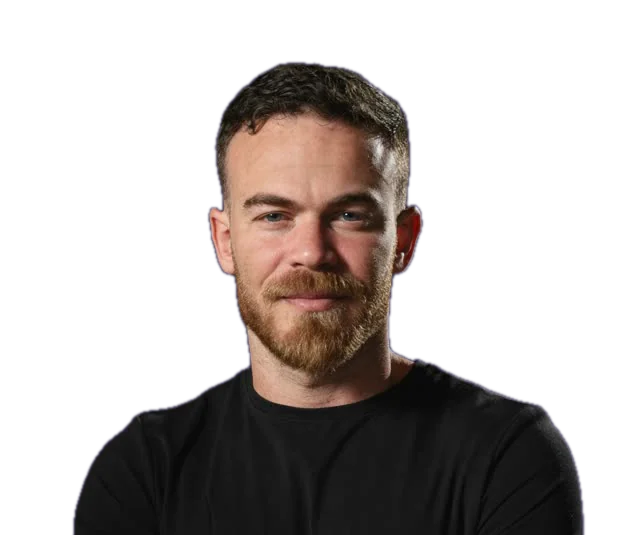
Gaston VaknudelFounder of Mucho Media. More than 5 years in paid advertising, ₪7M+ in managed ad budgets and more than 30 businesses, mostly in B2B and service businesses. More about Gaston
Intro meeting
Let's see if we're a good fit
A free 45-minute intro meeting, with no commitment. We go through your ad accounts and your CRM together, and you leave knowing what works, what doesn't, and what to do next.
- Your ad accounts and data stay in your name
- Month to month, no contract
- The CRM is included in the price
Leave your details and we'll call to set a time
Only your name and phone are required. The rest helps us prepare for the call.
Rather talk? +972 55-261-3938 or WhatsApp